
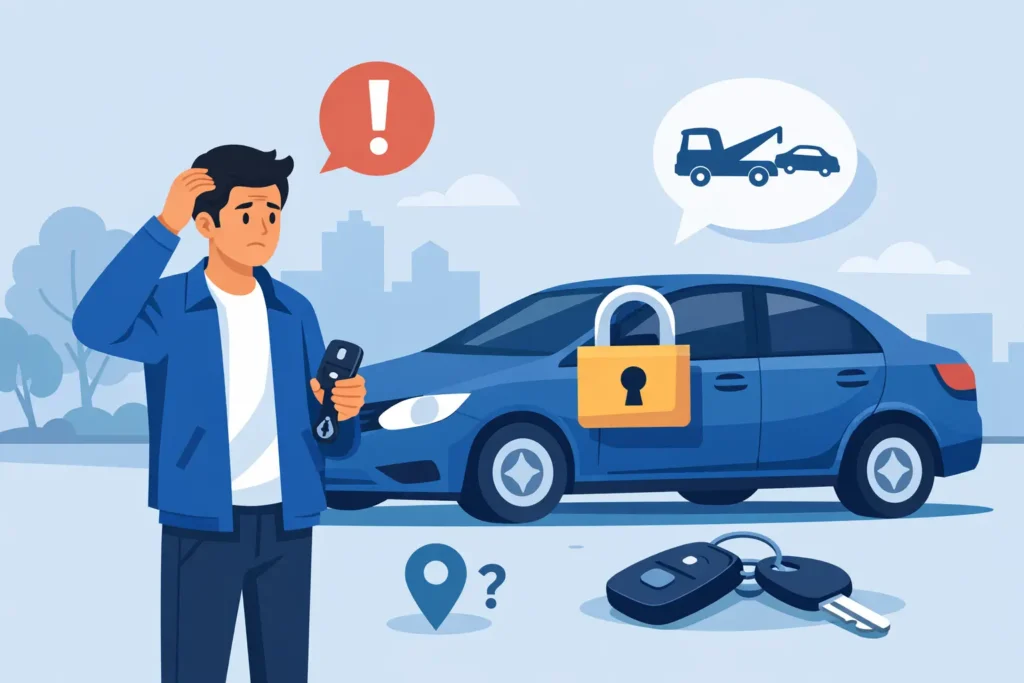
A car lockout usually happens at the worst possible moment – when the engine is off, your phone is inside, groceries are melting, or you are already late. If you are wondering locked out of car what to do, the first priority is simple: avoid turning a stressful mistake into vehicle damage, a broken window, or an expensive electronic problem.
Locked out of car – what to do first
Start with a quick reset. Check every door, including the rear doors and trunk, because one entry point may still be open even when the driver door is locked. If your vehicle has a keyless system, confirm whether the fob is actually outside the car, in a bag, or sitting in a dead zone where the vehicle cannot detect it properly.
Then look at the basics before taking action. Is a child, pet, or vulnerable passenger locked inside? Is the vehicle running? Are you parked in traffic, extreme cold, or direct summer heat? Those details change the right response. If safety is involved, treat it as urgent immediately.
If there is no immediate danger, pause before trying improvised tools. A rushed attempt with a coat hanger, screwdriver, wedge, or random online trick can bend the door frame, damage weather seals, scratch paint, or interfere with side-impact components inside the door.
The safest options before you force anything
Many modern vehicles offer more than one legitimate way back in, but it depends on the make, model, and key system. A spare key is still the fastest solution if someone nearby can bring it. For families or busy professionals, that is often the least costly route.
If your vehicle is connected to a manufacturer app, this may be the moment to use it. Some systems allow remote unlock through the app, but only if the account is active, the subscription is current, and the car still has proper network access. It works well when it works, but it is not universal and it is not always immediate.
Roadside assistance may also help, though service quality varies. Some providers can open basic locks quickly, while others may be limited when dealing with deadlocked systems, smart keys, double-locking features, or vehicles with sensitive electronic access systems.
When a DIY lockout attempt becomes a bad idea
Older cars with simple mechanical locks were more forgiving. Newer vehicles are not. Many now combine mechanical latching, anti-theft logic, alarm triggers, and communication between the key, body control module, and immobilizer system. That means a lockout can look simple from outside while the vehicle itself is managing access in a much more complex way.
Trying to force entry can create two separate problems instead of one. First, you can damage the lock, handle, glass, or weather stripping. Second, on some vehicles, you can trigger faults that lead to alarm issues, non-responsive entry, or later problems with the key and body electronics. That is especially true if the original issue was not just a locked door, but a failing smart key, weak fob battery, BCM communication issue, or a key that lost synchronization.
This is why a general locksmith is not always enough. Basic entry tools may open some vehicles, but they do not diagnose why the lockout happened in the first place.
If your keys are inside the car
When the keys are visible on the seat or in the ignition, people often assume the job is straightforward. Sometimes it is. But even then, the correct entry method depends on the vehicle’s lock design and anti-theft features.
A professional automotive locksmith will usually start with non-destructive entry. The goal is to regain access without bending the frame or compromising the door seal. That matters more than many drivers realize. A slightly bent frame can lead to wind noise, water leaks, and door alignment issues long after the lockout is over.
If the car is running and locked, speed matters even more. Besides fuel waste and theft risk, some vehicles can change access behavior while running. In these cases, skilled entry with the right tools is safer than experimenting under pressure.
If your key fob is not working
This is where lockouts get more technical. Sometimes you are not truly locked out because the key is inside. You are locked out because the vehicle no longer recognizes the key properly.
A dead fob battery is the most common reason, and on many cars there is still a backup procedure using the emergency key blade or a designated start position. But not every problem is a battery. Water damage, internal fob failure, signal issues, or lost programming can all stop a smart key from working as expected.
There are also cases where the car itself is the problem. A fault in the body control module, antenna circuit, door handle sensor, or immobilizer system can make a working key appear dead. If that is the real cause, replacing batteries and pressing buttons will not solve it.
This is where a mobile specialist has a clear advantage. If the issue goes beyond opening the door, advanced diagnostic tools can confirm whether the fault is in the key, the vehicle module, or the communication between them.
Lost keys, broken keys, and no spare
If the key is lost entirely, the solution is no longer just entry. The vehicle may need key cutting, transponder programming, smart key setup, or immobilizer matching before it can be driven again.
That distinction matters because many drivers assume they need towing and a dealership appointment. In reality, a qualified mobile automotive locksmith can often handle the full job on-site – from gaining access to cutting and programming a replacement key. For drivers in Greater Montreal, that can save hours of delay and the added cost of moving a disabled vehicle.
A broken key creates its own complications. If the blade snaps in the lock or ignition, removal must be done carefully to avoid damaging the cylinder. If the electronic portion of the key is also compromised, extraction alone will not get the car back on the road. The replacement may still need to be programmed to the vehicle’s system.
Why some lockouts are really electronic problems
Not every lockout starts with carelessness. Some begin with faults in the systems that manage vehicle access and starting authorization. A customer may think they simply cannot open the car, when the deeper issue involves module communication, a replacement BCM that was never matched correctly, or an immobilizer sync problem after previous repairs.
These cases are easy to misread if you only look at the door. For example, a vehicle may unlock mechanically but still refuse to start. Or the remote may stop responding after a control unit replacement. In those situations, access is only part of the job. The real repair may involve diagnostics and programming work that goes beyond standard locksmith service.
That is where a company like Car Kez stands apart. When needed, the same mobile visit can move from lockout assistance to key programming and OEM-level module diagnostics, which is often the difference between temporary access and a complete solution.
What to avoid while you wait for help
If professional help is on the way, do not keep testing the lock aggressively. Repeated pulling, prying, or slamming can turn a clean entry job into a damaged latch or misaligned door. If the remote is unresponsive, avoid assuming the battery is the only cause and forcing the issue further.
If children or pets are inside, stay with the vehicle, call emergency services if conditions are unsafe, and communicate the urgency clearly. If the car is parked in an unsafe location, prioritize visibility and personal safety while you wait.
It also helps to have the basics ready for the technician: vehicle make, model, year, your location, whether the car is running, and whether the key is inside, lost, broken, or not being recognized. That saves time and helps ensure the right tools and programming equipment are brought to the job.
How to reduce the chance of it happening again
The best prevention is usually simple. Replace weak fob batteries before they fail completely. Keep a spare key in a safe, planned location instead of treating it as an afterthought. If your vehicle has been showing inconsistent remote behavior, delayed unlocking, or intermittent no-start issues, do not wait for a full lockout to investigate.
It is also smart to pay attention after module replacements, collision repairs, or electrical work. Access and starting issues sometimes appear after parts like a BCM or ECU have been changed without proper configuration. A small warning sign today can become a full roadside problem later.
Getting locked out is frustrating, but it does not have to turn into vehicle damage or a wasted day. The right move is usually the calm one: protect the car, protect your time, and get the kind of help that can solve both the lockout and the reason it happened.
Pingback: Lost Car Key Replacement Mobile Service - Car Kez
Pingback: How Much Does Auto Locksmith Cost? - Car Kez
Pingback: When to Call a Mobile Auto Locksmith - Car Kez
Pingback: Emergency Car Unlock Service When You Need It - Car Kez