You notice the problem at the worst possible time. The key is gone, the fob stopped responding, the car will not recognize the transponder, or the doors are locked with everything still inside. In moments like that, a mobile auto locksmith is not just convenient – it is often the fastest way to get you back on the road without towing the vehicle or waiting on a dealership schedule.
For many drivers, the term still sounds limited to lockouts and spare keys. In reality, modern vehicle access and starting systems are tied to electronics, anti-theft systems, and module communication. That changes what kind of help you need. If the issue involves a smart key, immobilizer, ECU pairing, BCM communication, or a no-start condition linked to key programming, a true automotive specialist can save time, avoid unnecessary towing, and solve the problem where the car is parked.
What a mobile auto locksmith actually does
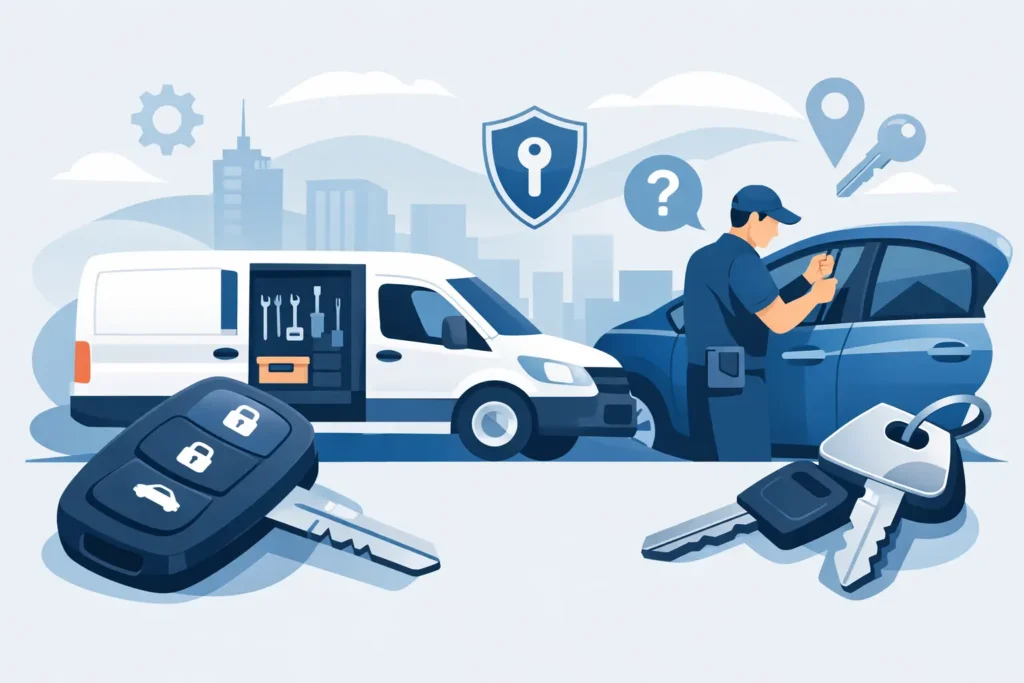
A qualified mobile auto locksmith handles more than opening a locked door. The job often includes key cutting, transponder key programming, smart key setup, remote replacement, ignition-related key issues, and emergency lockout service. On newer vehicles, the work may also involve diagnosing whether the key is the real problem or whether another module is failing to authorize the start sequence.
That distinction matters. A basic locksmith may be able to cut a mechanical key or help with access. But if your car uses encrypted transponder data, push-to-start authorization, or module synchronization, the job moves beyond simple hardware. It requires vehicle-specific programming tools, OEM-level diagnostics, and experience with how electronic control systems interact.
A strong mobile service brings the workshop to you. That means the technician arrives with key blanks, programming equipment, diagnostic tools, and the ability to test the system on-site instead of guessing. For vehicle owners, that can be the difference between one service call and several days of back-and-forth between towing, a parts counter, and a service department.
When a mobile auto locksmith is the right call
The obvious situation is a lockout. If your keys are inside the car, the trunk is shut, or the fob failed and you cannot gain access, mobile service makes immediate sense. There is no reason to move the vehicle for a problem that can be handled where it sits.
Lost keys are another common reason. If all keys are missing, many drivers assume the dealership is the only option. Sometimes that is possible, but it often means towing the car, proving ownership, ordering parts, and waiting for programming. A mobile specialist can often cut and program a replacement key on-site, including transponder and smart key solutions for many makes and models.
Then there are the situations that look like key problems but are not purely key problems. The car may crank inconsistently, fail to detect the fob, reject a newly replaced key, or display an immobilizer warning. In those cases, the issue may involve module matching, BCM communication, or programming data that was lost during battery, module, or ignition repairs. This is where a mobile automotive locksmith with advanced diagnostic capability becomes especially valuable.
The difference between basic locksmith work and advanced vehicle programming
Not every locksmith operates at the same level. For older vehicles with simple metal keys, the job is straightforward. For late-model vehicles, access and starting functions depend on secure communication between the key and multiple control units.
That means key programming is sometimes only one part of the repair. If the ECU, BCM, or TCM has been replaced, reset, corrupted, or left unmatched, the car may not start even with the correct key in hand. Some vehicles need immobilizer relearns, module configuration, or data synchronization before they will accept a newly programmed key. Without the right tooling, a provider may only confirm that the key exists, not restore full functionality.
This is where mobile service can surprise people. The right specialist is not arriving with only picks and key cutters. They are arriving with OEM-grade diagnostics, programming interfaces, and the ability to identify whether the problem is the key, the ignition authorization process, or a deeper electronic fault.
Why on-site service matters more than people expect
Convenience is the obvious benefit, but it is not the only one. On-site service also allows the technician to see the vehicle in the exact condition where the problem occurred. That helps with intermittent issues, battery-related faults, and situations where moving the car could change symptoms.
If the vehicle is dead in a garage, stuck in a driveway, parked in a restricted area, or disabled at work, mobile service removes the first obstacle. You do not need to arrange a tow just to begin diagnosis. That alone can reduce cost and wasted time.
There is also a practical advantage when programming is involved. Many security functions require stable voltage, communication checks, and confirmation that the vehicle recognizes the new key or module before the job is complete. A field specialist who is equipped for that process can perform the work in real conditions rather than handing you a half-finished solution.
What to expect during a mobile auto locksmith visit
A professional visit usually starts with verification. The technician confirms ownership, identifies the vehicle correctly, and determines whether the issue is access, key loss, fob failure, ignition trouble, or an electronic authorization problem. That first step matters because two cars with similar symptoms can need very different repairs.
From there, the service may involve opening the vehicle, decoding or cutting a key, programming a transponder, pairing a smart key, or running diagnostics on related control modules. If the problem is deeper than a key alone, testing may include immobilizer status, module communication faults, and synchronization checks.
Good service is direct about trade-offs. In some cases, a replacement key is enough. In others, a damaged module, previous repair attempt, aftermarket remote starter, or water intrusion may complicate the job. The value of an experienced technician is not pretending every case is simple. It is identifying the fastest reliable fix and being clear about what can be completed on-site.
Why dealership service is not always the best first step
Dealerships have their place, especially for warranty work and brand-specific repairs. But when the immediate problem is access, key replacement, immobilizer programming, or module matching on a disabled vehicle, the dealership route can be slower than most drivers expect.
You may need to tow the vehicle before anyone even looks at it. Parts may need to be ordered. Service schedules may be booked out. And if the issue turns out to be a programming fault that can be corrected on-site, the transport and delay added cost without adding value.
A mobile specialist can be the better first move when the goal is speed, accurate diagnosis, and keeping the vehicle where it is. For drivers in Greater Montreal, that is the gap Car Kez is built to fill – practical locksmith response backed by advanced automotive electronics capability.
Choosing the right mobile auto locksmith
If the vehicle is older and the problem is simple, many providers can help. If the vehicle is newer or showing immobilizer, smart key, or no-start issues, it is worth asking more specific questions. Do they handle transponder and smart key programming? Can they diagnose authorization faults? Do they work with ECU, BCM, or TCM-related issues when programming is involved? Are they equipped for emergency calls and on-site testing?
Those questions help separate general roadside help from true automotive electronic service. You are not just paying for someone to arrive. You are paying for the ability to finish the job correctly.
That matters most when the issue has already cost you time. If a vehicle has been sitting, if another key stopped working after module replacement, or if a remote and a metal key both fail to restore normal operation, you need more than a quick workaround. You need a technician who can trace the problem through the system and fix it where the car is.
Modern vehicles do not give much warning before a key or security issue turns into a major interruption. The best time to understand what a mobile auto locksmith can do is before you are stranded in a parking lot, late for work, or facing a tow you may not need. When the right specialist shows up with both locksmith tools and programming capability, the solution is usually closer than it looks.