Locked out at a gas station, staring at a key fob that suddenly stopped working, or dealing with a car that will not start after a module swap – this is usually when people ask, how much does auto locksmith cost? The short answer is that pricing can start around $75 for a basic unlock and climb into several hundred dollars for smart keys, transponder programming, or immobilizer-related work. The real cost depends on what failed, what kind of vehicle you drive, and whether the job needs basic locksmith service or advanced electronic programming.
For most drivers, the biggest mistake is assuming every car locksmith job is the same. It is not. Opening a locked door is one kind of service. Cutting and programming a replacement key is another. Diagnosing why a vehicle will not recognize that key, or why the BCM and immobilizer are no longer communicating, is a different level of work entirely.
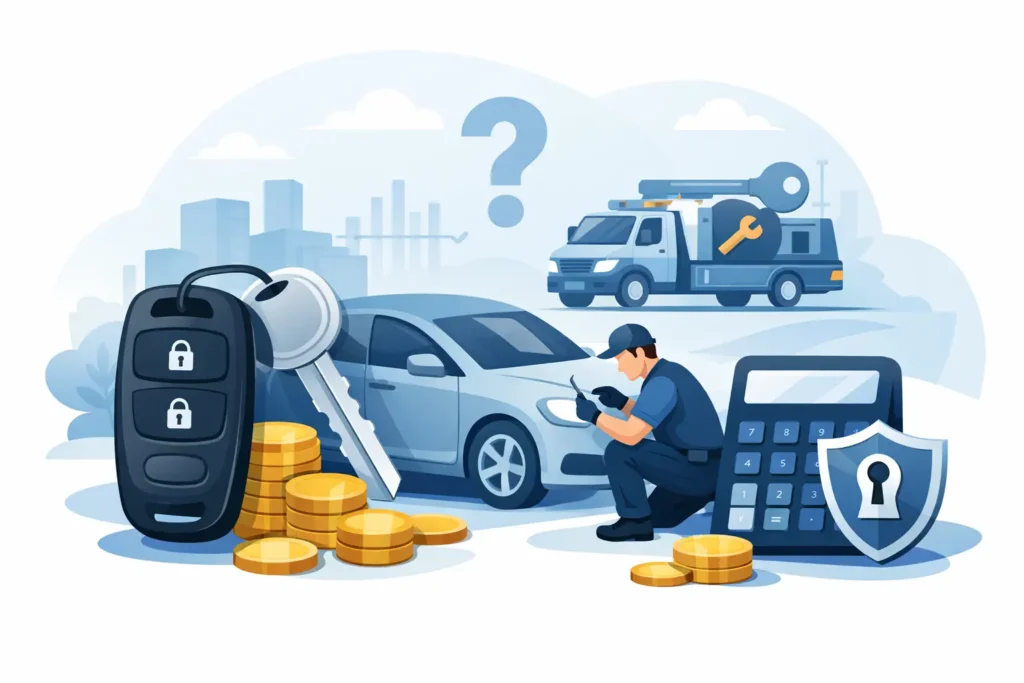
How much does auto locksmith cost for common services?
If you are trying to budget quickly, it helps to think in service categories rather than one flat price.
A basic vehicle lockout often falls between $75 and $150. That is usually the lower end because the job is focused on gaining entry without damaging the vehicle. If the car is in a difficult location, it is late at night, or the lockout involves a high-security model, the price may move higher.
A duplicate mechanical key with no chip can be relatively affordable, often in the $80 to $150 range depending on the key blank and cutting method. Once you move into transponder keys, the price usually increases to around $150 to $300 because the key has to be cut and electronically paired to the vehicle.
Smart keys and proximity fobs often cost more, commonly from $250 to $500 or more. That range reflects both the hardware cost and the programming process. Some vehicles require more complex security access procedures, and luxury or late-model vehicles can push the total beyond that range.
Ignition repair or extraction work can vary widely, often landing between $150 and $350 for simpler issues, but more if parts are damaged or the ignition assembly needs replacement. Broken key extraction is sometimes straightforward and sometimes not. If the key snapped in the door or ignition and damaged internal components, the labor increases.
Then there are cases that are not really just locksmith jobs. If the vehicle has an immobilizer issue, module mismatch, or a no-start condition tied to ECU, BCM, or TCM communication, the cost can rise because the work moves into diagnostics and programming. In those situations, the price is based on technical time, specialized tools, and whether module coding or synchronization is required on-site.
What affects auto locksmith pricing the most?
The vehicle itself is usually the biggest factor. Older cars with simple metal keys are much cheaper to service than newer models with encrypted transponders, push-to-start systems, and anti-theft programming. Two cars parked side by side may look similar, but one may need a basic cut key while the other requires secure programming through OEM-level diagnostics.
The type of problem also matters. A lockout is usually faster than an all-keys-lost situation. If you still have one working key, making a duplicate is often easier and cheaper than creating a new key from scratch. When all keys are gone, the technician may need to decode the lock, cut a new key, and program the vehicle to accept it.
Time and location can change the final bill too. Emergency mobile service after hours, in bad weather, or far from a standard service route often costs more. That is not just convenience pricing. A true mobile specialist is bringing tools, key stock, programmers, diagnostic equipment, and field support directly to your location.
Skill level is another factor people overlook. A general locksmith may handle a door unlock or simple duplication, but modern vehicles often need more than that. If the issue involves anti-theft systems, electronic steering locks, module replacement, or failed key learning procedures, you are paying for a technician who can do more than cut metal.
Why smart key and transponder jobs cost more
A modern car key is part security device, part electronic credential. It is not just shaped metal anymore. The chip inside the key or fob has to communicate correctly with the vehicle’s immobilizer system. If that handshake fails, the car may crank and not start, or not respond at all.
That is why a transponder or smart key service costs more than a traditional house-key-style cut. The technician may need to verify key compatibility, generate the correct key, access vehicle security functions, and program the new key into memory. In some vehicles, there are limits on how many keys can be added without deleting old ones first. In others, PIN codes, dealer-level access, or module resets may be involved.
When customers compare prices online, they often see a cheap key shell or aftermarket fob and assume that is the total cost. It is not. The part alone does not solve the problem if the blade is wrong, the chip is unsupported, or the vehicle needs proper synchronization to start.
Dealer vs mobile locksmith: what are you really paying for?
A dealership is not always the wrong choice, but it is rarely the fastest or most convenient one when the vehicle is disabled. If your keys are lost or the car will not start, towing the vehicle adds cost before the repair even begins. Then you may be waiting on appointments, key orders, and in-shop processing.
A mobile automotive specialist can often handle the same key replacement or programming work at your location. That changes the value equation. You are not only paying for the key or the unlock. You are paying to avoid a tow, reduce downtime, and get the job done where the car sits.
This matters even more when the issue is deeper than a lockout. If a replacement module needs matching, or the immobilizer is preventing startup after electrical work, mobile service with OEM-grade diagnostics can save both time and unnecessary parts swapping. That is where a specialist stands apart from a basic locksmith service.
How to avoid overpaying
Ask what is included before approving the work. A fair estimate should clarify whether the quote covers the service call, labor, key cutting, programming, diagnostics, and any emergency or after-hours fee. Some low quotes sound attractive until you realize programming or travel is extra.
It also helps to be precise about the problem. Saying “my key does not work” can mean several things. Maybe the battery in the fob is dead. Maybe the transponder chip is damaged. Maybe the ignition antenna ring is not reading the key. Maybe the vehicle has a BCM issue. The more accurately the problem is described, the more accurate the estimate tends to be.
If you still have a working key, say so right away. That can lower the cost significantly. If all keys are lost, mention the year, make, model, and whether the car uses push-button start. Those details affect both pricing and what equipment is needed on-site.
When the cheapest quote becomes the expensive one
Price shopping makes sense, but with automotive security systems, the cheapest option can create more trouble. Poorly cut keys, incompatible aftermarket fobs, incomplete programming, or improper immobilizer procedures can leave you with a car that still does not start. In worse cases, bad programming can create new faults or erase working keys.
That is why technical capability matters. If the job involves ECU, BCM, TCM, or immobilizer communication, the goal is not just to make a key. The goal is to restore proper vehicle operation. That takes the right equipment and the right process.
For drivers in Greater Montreal, that is the difference between waiting on a tow and getting back on the road where the vehicle sits. Car Kez is built around that mobile, specialist approach – not just opening doors, but solving modern key and module problems on-site.
So, how much should you expect to pay?
For a straightforward lockout, expect the lower end of the range. For a duplicate transponder key, expect more. For smart key replacement, all-keys-lost situations, ignition issues, or immobilizer and module-related programming, prepare for a higher price because the work is more specialized.
The smartest way to think about cost is not just “what is the cheapest service call?” but “what gets the vehicle working again without extra delays, towing, or repeat visits?” In auto locksmith work, that is usually where the real value is.
If you are stuck roadside or dealing with a vehicle that will not recognize its key, the best next step is a clear diagnosis. Once the actual fault is identified, the price usually makes a lot more sense – and so does the fastest path back behind the wheel.