
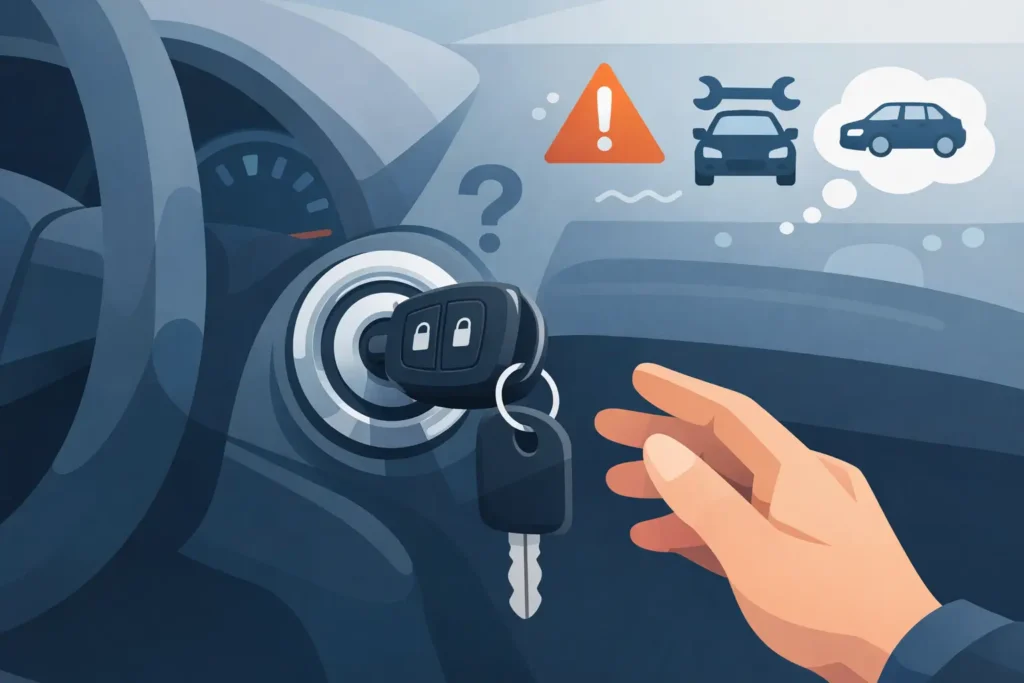
You park, shift into Park, turn the engine off – and the key will not come out. A car key stuck in ignition is more than annoying. It can leave you stranded, drain the battery, and turn a quick stop into a real access and starting problem.
In many cases, the issue is simple. In others, it points to a fault in the shifter, ignition cylinder, steering lock, battery voltage, or a related control system. The key is knowing what you can safely check on your own and when forcing it will make the repair more expensive.
Why a car key gets stuck in the ignition
Most vehicles are designed to release the key only when several conditions are met. The transmission usually needs to recognize Park, the ignition has to return fully to the off position, and some systems depend on proper battery voltage or a working shift interlock. If one part of that chain fails, the key can stay trapped.
A worn key is one of the most common causes. Over time, the cuts on the blade round off, and the ignition cylinder pins do not align as cleanly as they should. You may still be able to start the vehicle, but removing the key becomes inconsistent.
The shifter is another frequent culprit. If the vehicle is not fully in Park, or the park position switch is not reading correctly, the ignition may not release the key. This is especially common when the shifter feels loose, stiff, or slightly out of alignment.
Steering wheel tension can also hold things up. If the wheels are turned and the steering lock is loaded, the ignition may bind just enough to keep the key from rotating all the way back. That usually feels mechanical rather than electronic.
Then there are electrical faults. Low battery voltage, a failed brake-shift interlock component, or a problem in the body control side of the system can interfere with key release. On newer vehicles, what looks like a simple key issue may actually involve communication between the ignition switch, BCM, and shifter logic.
What to do first when your car key is stuck in ignition
Start with the lowest-risk checks. The goal is to release the key without damaging the cylinder, key blade, or steering column components.
Make sure the vehicle is fully in Park. Push the brake, move the shifter out of Park, then firmly place it back into Park. Do not do this aggressively. You are checking whether the park position was only partially engaged.
Next, relieve steering wheel pressure. Hold the wheel and gently turn it left and right while lightly turning the key toward the off position. If the steering lock is binding, this can free it.
If the engine is off but accessories are still active, check the battery condition. A weak battery does not always stop the car from powering on, but it can create odd behavior in ignition and interlock systems. If the dashboard is dim or electronics are acting erratically, battery voltage may be part of the problem.
If you have a spare key, compare it to the one in the ignition. A bent or heavily worn key can stick in the cylinder even if it still starts the vehicle. Do not insert a badly damaged spare if the cylinder already feels tight.
You can also gently wiggle the key, but this is where many people make the problem worse. Light movement is fine. Twisting hard, pulling upward, or using pliers is not. That can snap the key, damage wafers inside the ignition, or turn a service call into an ignition replacement.
When the problem is mechanical
A mechanical issue usually shows clear symptoms. The key may feel rough going in and out, the ignition may stick in one position, or the steering column may feel locked tighter than normal. In older vehicles, cylinder wear is a common reason the key will not release.
Sometimes the key itself is the whole issue. If the cuts are worn, the pins inside the ignition do not return properly when you rotate back to off. In that case, cutting a fresh key to code rather than copying a worn one often solves the problem more effectively than forcing the old key to keep working.
In other cases, the ignition cylinder is worn internally. That repair depends on the vehicle. Some cylinders can be serviced or replaced without major programming. Others are tied into anti-theft components and need matching procedures after installation. That is where generic roadside help usually stops being enough.
When the problem is electrical or module-related
A car key stuck in ignition is not always about the key or cylinder. Modern vehicles rely on several systems working together, and a fault in one area can show up somewhere else.
If the shifter is not signaling Park correctly, the key may stay locked in place even though the lever looks right. If the brake switch, interlock solenoid, or body control module is malfunctioning, the release logic may never complete. Some vehicles also store fault codes related to these circuits, which helps narrow down the cause quickly.
This is where proper diagnostics matter. Guessing can lead to replacing the wrong part. A basic locksmith may handle extraction or key cutting, but if the issue involves BCM behavior, immobilizer communication, or programming after an ignition-related repair, you need someone with OEM-level diagnostic capability.
What not to do
Do not spray random lubricants into the ignition without knowing the cylinder type and condition. Some products attract debris, gum up the internals, or interfere with delicate components.
Do not hammer on the key or steering column. Do not force the shifter. And do not keep cycling the ignition if the key already feels unstable or cracked. A broken key in the ignition adds extraction work and can leave you with a vehicle that cannot be moved.
If the battery is draining because the key is stuck between positions, avoid leaving accessories on while you experiment. What starts as a key release problem can quickly become a no-start call.
When to call a professional
Call for help if the key will not release after basic checks, if the key feels like it may break, or if the vehicle shows signs of an electrical fault. The same applies if the shifter does not feel normal, the battery is low, or the dashboard displays security or transmission-related warnings.
For many drivers, the biggest issue is not just fixing the key. It is avoiding a tow, a dealership wait, and a chain of unnecessary part replacements. A mobile specialist can test the key, inspect the ignition, verify shifter and interlock operation, and diagnose related electronic faults on-site.
That matters even more when the problem overlaps with immobilizer or module communication issues. If an ignition component, BCM, ECU, or related system needs attention, the right equipment can make the difference between a quick resolution and several days of downtime. At Car Kez, that is exactly the kind of field problem we are set up to solve.
Can you prevent a car key from getting stuck in ignition?
Usually, yes – at least some of the time. If your key has to be jiggled regularly, if removing it takes more effort than it used to, or if the shifter only releases the key when placed in Park a certain way, those are early warnings. Addressing them early is much cheaper than waiting for a complete failure.
It also helps to stop using badly worn copies. Drivers often duplicate an already worn key, which transfers the problem to the next key. A fresh key cut correctly can reduce ignition wear and improve operation right away.
For vehicles with known electrical quirks, pay attention to weak battery symptoms and intermittent warning lights. Low voltage and communication faults rarely fix themselves, and they often show up first as strange convenience issues before turning into a no-start condition.
A stuck key can be minor, or it can be the first sign that the vehicle is not recognizing Park, the ignition is failing, or an electronic control issue is developing. The safest move is to treat it as a real fault, not a temporary annoyance. If the key does not release normally, get it checked before the next stop leaves you with a dead battery, a broken key, or a car that will not move.