
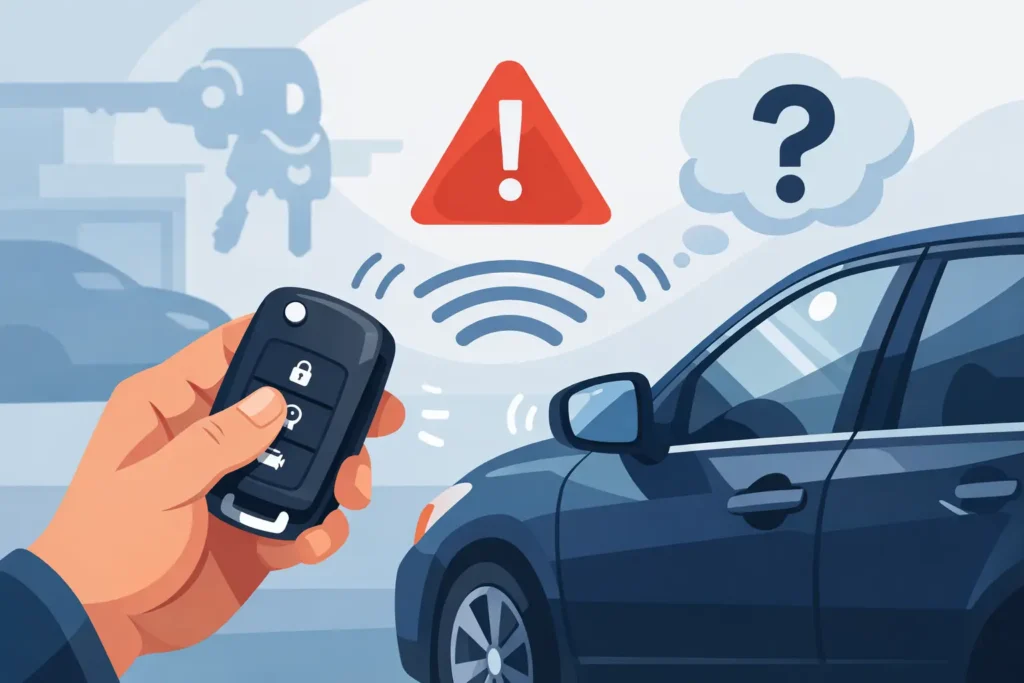
You walk up to your car, press the button, turn the key, and nothing happens. If you’re asking, why is my car key not working, the answer is not always as simple as a dead battery or a worn-out key. Modern vehicle keys are tied to the ignition, immobilizer, body control systems, and in many cases multiple electronic modules that all need to communicate properly.
That is why one key problem can show up in different ways. Maybe the doors will not unlock, but the engine still cranks. Maybe the key turns, but the car will not start. Maybe the smart key is detected sometimes and ignored other times. The symptom matters because it points to a very different repair path.
Why is my car key not working if the key looks fine?
A car key can look perfectly normal and still fail. With older mechanical keys, the issue is often wear. Tiny changes in the cut pattern can stop the ignition or door lock from recognizing the key properly. With transponder keys and proximity fobs, the visible shell tells you very little. The internal chip, battery, circuit board, or programmed data may be the real problem.
A common mistake is assuming the key itself is always at fault. In many vehicles, the key is only one part of the starting authorization process. The immobilizer antenna ring, ignition switch, BCM, ECU, or push-to-start system can also be responsible. If one module stops reading or validating the key, the car may act like the key failed even when the key is still programmed correctly.
The most common reasons a car key stops working
The key fob battery is dead
This is the simplest possibility and one of the most common. If your remote suddenly stops locking and unlocking the doors, a dead coin-cell battery is often the reason. Sometimes the car will still start if you place the fob near the start button or in the backup detection spot, but remote functions may be gone.
That said, a battery swap does not solve every case. If the battery leaked, was installed backward, or the contacts are damaged, the fob can stay inactive. On some vehicles, a low vehicle battery can also make the key appear unresponsive.
The key is damaged internally
Keys and fobs get dropped, sat on, exposed to moisture, and thrown into bags with everything else. The shell may survive while the internal board cracks or the transponder chip shifts out of place. In those cases, the emergency blade might still open the door, but the vehicle will not start because the chip is not being read.
Smart keys are especially sensitive to internal damage. A fob can work intermittently for days before failing completely, which makes diagnosis harder if you only test it once.
The key has lost programming or is no longer matched properly
Some keys stop working after module replacement, battery issues, attempted programming, or electrical faults. If the BCM, ECU, or immobilizer data changes, the vehicle may reject a key that used to work. This is common after used module installation, collision repairs, or certain electrical repairs where synchronization is not completed correctly.
This is where basic key cutting and duplication are not enough. The issue may require OEM-level diagnostics and module matching, not just a new shell or fresh battery.
The ignition cylinder or door lock is worn
If you have a traditional metal key and it suddenly becomes hard to turn, the problem may be mechanical rather than electronic. Worn wafers inside the ignition or door lock can prevent the key from turning even when the cut is technically correct. You may notice the key works in one lock but not the other, or only turns if you jiggle the steering wheel and key at the same time.
Mechanical wear can also mislead people into thinking they need a new key when the lock itself is the issue.
The immobilizer is blocking the start
If the engine cranks but does not start, or starts and dies right away, the immobilizer system may not be authorizing the key. Some cars show a security light, key warning, or message on the dash. Others give very little feedback.
An immobilizer fault can come from a bad chip, a failed antenna ring, corrupted data, or a communication problem between modules. This is one of the most common reasons people replace a battery or buy a replacement fob and still get nowhere.
The vehicle battery or electrical system is weak
Sometimes the key is fine and the car is the problem. A weak vehicle battery can disable remote access, interfere with push-to-start detection, or create low-voltage errors that affect BCM and immobilizer operation. If your lights are dim, accessories act strangely, or the car has been sitting for a while, start there.
Low voltage creates misleading symptoms. The key may work one moment and fail the next, especially in cold weather or after repeated start attempts.
What to check before calling for service
Start with the basics, but do not force anything. If you have a spare key, test it. That is often the fastest way to tell whether the problem is the key or the vehicle. If the spare works, your original key likely has a battery, chip, or programming issue. If neither key works, the fault is more likely in the vehicle’s lock, ignition, immobilizer, or module communication.
If you use a smart key, replace the fob battery and try the manufacturer’s backup start method. Many vehicles allow starting by holding the fob close to the button or steering column. Check your car battery condition too, especially if the issue started after the car sat unused.
For a mechanical key, inspect for visible wear, bending, or cracking. If the key will not turn, do not twist harder. You can damage the cylinder and turn a key problem into an ignition repair.
Why is my car key not working after I changed the battery?
This is a very common question, and the answer depends on what stopped working. If only the remote buttons failed, the new battery may be poor quality, inserted incorrectly, or not making solid contact. The fob may also have internal board damage that a battery cannot fix.
If the car still will not start after a battery change, the transponder or proximity authentication may be the issue, not the battery. On some vehicles, the remote battery powers convenience functions, while the anti-theft authorization depends on a separate chip or a successful handshake with the immobilizer system.
In other words, changing the battery rules out one simple cause, but it does not prove the key is healthy.
When the problem is bigger than the key
Vehicle key issues are increasingly tied to electronics beyond the fob itself. If a car recently had an ECU, BCM, steering lock, ignition module, or transmission module replaced, key recognition problems can follow. Some vehicles require security data transfer, relearning, or synchronization across multiple systems before the key will be accepted again.
This is where mobile diagnostics matter. A field specialist with the right equipment can determine whether the issue is key failure, immobilizer lockout, module mismatch, or a power and communication fault. That saves time and avoids replacing parts blindly.
For drivers dealing with non-start conditions, especially when towing to a dealership is the alternative, on-site diagnosis is often the fastest path back on the road. Services like Car Kez handle both the locksmith side and the electronic side, which matters when the fault is not obvious.
When you need professional help right away
If you are locked out, stranded, down to one non-working key, or getting anti-theft warnings on the dash, it is time to bring in a specialist. The same applies if your spare key also fails, your ignition will not turn, or the car had recent electrical or module work.
A general locksmith may be able to cut a key or open a door, but not every provider can diagnose immobilizer faults, module synchronization problems, or advanced smart key failures. That difference matters when the car is rejecting the key for reasons that have nothing to do with the blade or fob shell.
The best repair depends on the actual fault. Sometimes it is a quick battery replacement. Sometimes it is a new key shell and board. Sometimes it is full key programming, EEPROM or module work, or correcting a BCM and ECU mismatch. Guessing gets expensive fast.
If your car key stopped working, the good news is that most failures leave clues. The key is knowing whether you are dealing with a simple battery issue, a worn mechanical component, or a deeper electronic authorization problem – and getting the right help before a small inconvenience turns into a no-start situation.