
You usually realize a key is truly gone at the worst possible moment – when you’re late for work, parked at a grocery store, or standing outside your driveway with no backup in sight. If you’re searching for how to replace lost car key service, the good news is that most vehicles can be handled faster than people expect, and often without towing the car anywhere.
The right fix depends on what kind of key your vehicle uses, whether all keys are missing, and whether the immobilizer system needs programming. For some cars, replacing a lost key is a simple cut-and-program job. For others, especially push-to-start models or vehicles with module issues, the work can involve advanced diagnostics, immobilizer relearn procedures, and communication with systems like the BCM or ECU.
How to replace lost car key without wasting time
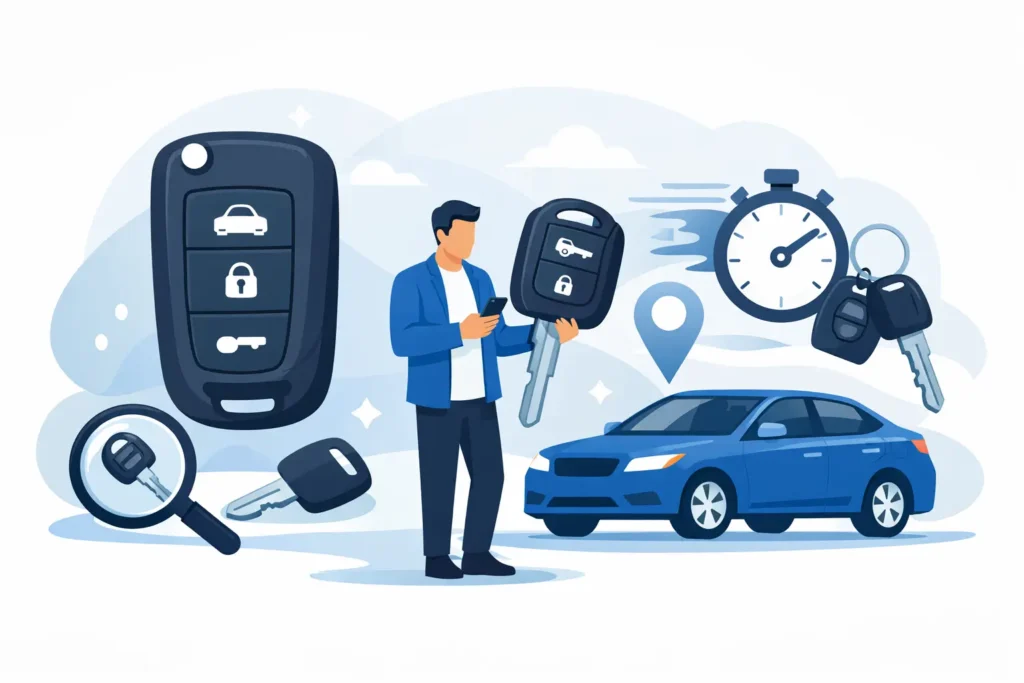
The first step is figuring out exactly what was lost. A basic metal key is very different from a transponder key, remote head key, flip key, or proximity smart key. Two keys can look similar on the outside but require completely different programming steps.
If you still have a spare, the process is usually easier and less expensive. A technician can decode the key, cut a matching replacement, and program it to the vehicle. If all keys are lost, the job becomes more involved because the vehicle often has to be accessed, key data has to be generated or read, and a new key must be introduced to the immobilizer system from scratch.
What helps most at this stage is having your vehicle year, make, model, and VIN ready. In many cases, proof of ownership and ID are also required before any key work is done. That protects the vehicle owner and keeps the service legitimate.
What happens when all car keys are lost
When every key is missing, people often assume the dealership is the only option. Sometimes a dealership is part of the solution, but not always. Many lost key situations can be resolved on-site by a qualified automotive locksmith with the right cutting equipment, OEM-level diagnostics, and programming tools.
The process usually starts with gaining access to the vehicle if it’s locked. After that, the replacement method depends on the vehicle platform. Some keys can be generated by code. Others require reading immobilizer data directly from the car or from a related module. On newer vehicles, especially those with encrypted systems, the work may involve programming through the BCM, ECU, gateway, or other control units.
This is where experience matters. A general locksmith may be able to open the car or cut a basic blade, but that does not always mean they can complete the electronic side of the job. If the vehicle will not recognize the new key, cutting the key is only half the repair.
Mechanical key, transponder key, or smart key
A traditional mechanical key mainly needs accurate cutting. A transponder key must also be programmed so the immobilizer allows the engine to start. A smart key adds another layer because the car has to recognize the proximity function, push-button start authorization, and sometimes remote locking features separately.
That difference affects both time and cost. It also explains why online key blanks are often a gamble. A cheap replacement shell or aftermarket key may look correct but still fail to program properly or support all functions.
How long does it take to replace a lost key?
It depends on the vehicle and the key type. A straightforward transponder key replacement can sometimes be done in under an hour. A proximity key on a newer vehicle may take longer, especially if all keys are lost or if there is an issue with the immobilizer, BCM, or ECU communication.
Delays usually come from one of three places. The first is incorrect key type identification. The second is limited access to programming functions on certain models. The third is a deeper electronic issue that gets mistaken for a lost key problem.
That last point matters more than most drivers realize. Sometimes the key is not the only issue. If a module has been replaced, lost synchronization, or has existing fault codes, the vehicle may still refuse to start even after a new key is programmed. In that case, proper diagnostics are not optional.
Dealership vs mobile locksmith
A dealership can replace many factory keys, but the process often includes ordering parts, waiting for availability, and towing the vehicle if no working key is present. That may be manageable if the car is already at the dealer. It is much less convenient if the vehicle is stuck at home, at work, or in a parking garage.
A mobile automotive locksmith offers a different advantage – the work comes to the car. For vehicle owners dealing with a lost key in real time, that can save both towing costs and lost hours. The key factor, though, is choosing a provider who does more than basic lock work.
Vehicles with immobilizer faults, module replacements, or no-start conditions need more than a hardware solution. They need someone who can diagnose electronic authorization problems and program the vehicle correctly on-site. That is where a specialized service like Car Kez stands apart from standard roadside assistance or basic locksmith coverage.
What you should have ready before service arrives
You do not need to know the technical side of your immobilizer system, but a few details make the job much faster. Have your registration or proof of ownership available, along with photo ID. If possible, provide the VIN, exact year, make, model, and whether the car uses a turn-key ignition or push-button start.
It also helps to mention what happened before the key was lost. Was the vehicle working normally? Was there recent module work, a dead battery, water exposure, or collision damage? Those details can point to a programming issue instead of a simple missing key.
If you have a spare that works inconsistently, say so. Intermittent operation may mean the problem is not total key loss but signal failure, chip damage, ignition antenna problems, or a fault in the vehicle’s anti-theft system.
Cost depends on more than the key itself
People often ask for a flat price right away, but lost key pricing varies for good reason. A basic metal key is at the low end. A laser-cut transponder key costs more. A push-to-start smart key can cost significantly more because the key itself is more complex and the programming procedure is more involved.
All keys lost usually costs more than duplicating an existing one. If the car is locked, if emergency service is needed after hours, or if advanced module programming is required, the total can increase. Some vehicles also require PIN retrieval, EEPROM work, or additional diagnostic time when standard programming paths are blocked.
That does not automatically mean the most expensive option is the dealership. In many cases, mobile service is still the more efficient route because it avoids towing and cuts down on downtime.
Can you replace a lost car key yourself?
For most modern vehicles, not completely. You might be able to buy a blank key or replacement fob online, and in a few older models you may be able to follow a manual pairing procedure for remote functions. But that is not the same as programming the immobilizer to allow the car to start.
DIY attempts often create extra delays. The wrong key can lock up programming sessions, fail to support the proper frequency, or leave you with a cut key that turns the door but will not start the engine. If all keys are lost, the risk is even higher because there is no working reference key to fall back on.
A better approach is to treat key replacement as both a locksmith job and an electronic programming job. On newer vehicles, those two parts are tied together.
When a lost key is really a bigger electronic issue
Not every no-key or no-start situation starts with a missing key. Sometimes the fob is present, but the car says no key detected. Sometimes a replacement key has already been made elsewhere, but the engine still will not crank. In these cases, the fault may be inside the vehicle’s systems rather than the key itself.
Problems with the BCM, ECU, steering lock, ignition reader, or security data can block successful key learning. Module replacement without proper matching can do the same. That is why advanced diagnostics matter. A technician who can read system faults, verify module communication, and complete programming at the control-unit level can solve problems that a basic key cutter cannot.
If your vehicle is immobilized and the issue feels more complicated than a simple lost fob, say that upfront. It helps direct the service call properly and avoids wasted steps.
A smarter way to handle the next lost key
Once you’re back in the car, the best move is simple: get a spare made before you need one. Replacing one working key is almost always easier than replacing the last key. It costs less, takes less time, and gives you a backup before the next emergency shows up in a parking lot or on a freezing morning.
Losing a key feels disruptive because it stops your day cold. The fix does not have to be. With the right equipment, the right programming capability, and service that comes to the vehicle, most drivers can get back on the road faster than they expected.
Pingback: How Mobile Car Key Replacement Works On-Site - Car Kez