
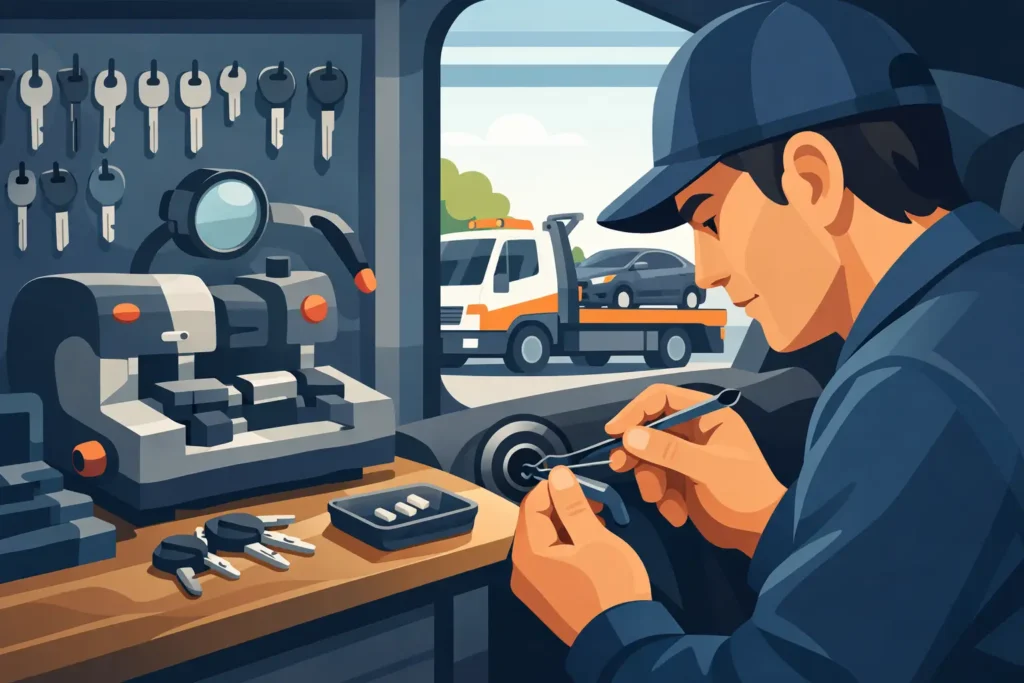
A key snaps in the ignition or door lock at the worst possible moment – before work, in a parking garage, or with groceries in the back seat and no spare in sight. When that happens, a broken car key extraction service is not just about pulling out metal. The real job is protecting the lock, checking for internal damage, and getting you back into a working key solution without creating a bigger problem.
What a broken car key extraction service actually includes
Many drivers assume extraction is a quick grab-and-pull job. Sometimes it is. Often, it is not. A broken key can lodge deep inside a door cylinder, ignition, trunk lock, or even leave part of the blade misaligned inside the mechanism.
A proper broken car key extraction service starts with identifying where the break happened and why. If the key snapped because of metal fatigue, wear, or a bent blade, the lock may still be fine. If it broke because the ignition was binding, the steering lock was under tension, or the wafer positions inside the cylinder were already damaged, extraction is only the first step.
That difference matters. Removing the fragment without inspecting the lock can leave you with a second failure a few hours later. A professional approach focuses on safe extraction first, then key replacement, and then any programming or ignition diagnosis needed to restore dependable operation.
Why car keys break in the first place
Keys rarely break without warning. Most fail after months or years of wear. The blade may thin near the shoulder, the cuts may round off, or the key may already have a slight twist from repeated force. Drivers often notice the key sticking, needing extra wiggling, or feeling loose in the ignition before it finally snaps.
Modern vehicles add another layer. Even when the broken part looks mechanical, many keys also contain a transponder chip or smart key electronics. That means the situation can shift from a simple lock problem to a start authorization issue. You may remove the broken blade and still be unable to start the car if the programmed portion of the key is damaged or missing.
Weather can also play a role. Frozen locks, corrosion, and dirt inside the cylinder increase resistance. So does using the wrong key, a worn duplicate, or a copy cut from an already worn key. In those cases, forcing the key usually makes the break worse.
Why DIY extraction can make the problem worse
The internet makes broken key removal look easy. Tweezers, glue, paper clips, and improvised hooks are common suggestions. They also cause a lot of damaged locks.
The problem is simple. Most broken key fragments sit flush or below the face of the cylinder. If you push on them with the wrong tool, they slide deeper. Glue often contaminates the wafers and can permanently bind the lock. Tweezers are usually too thick to reach around the fragment and tend to wedge it tighter instead.
Ignitions are even less forgiving. A damaged ignition cylinder can turn a mobile repair into a larger replacement job. If the key broke under steering wheel tension or inside a worn ignition, forcing extraction without releasing that tension can damage internal parts. What should have been a precise service call becomes a no-start issue.
That is why a field specialist treats extraction as controlled work, not a guessing game. The goal is not just to get the piece out. It is to get it out without turning a recoverable problem into lock replacement.
How a mobile locksmith handles broken key extraction
A professional broken car key extraction service usually begins with cylinder access, lighting, and fine extraction tools sized for automotive locks. The technician checks whether the fragment is visible, whether the keyway is obstructed, and whether the lock is in a position that allows safe removal.
If the fragment can be extracted cleanly, the next step is verifying that the cylinder still operates correctly. That means testing for smooth rotation, checking for sticking wafers, and confirming the lock was not the underlying cause of the break.
From there, the right fix depends on the vehicle. Some cases only need a new mechanical key cut to code. Others require a transponder key, remote head key, or smart key to be cut and programmed on-site. If the original key was the only programmed key and the chip was damaged in the break, programming may be necessary before the car will start.
This is where specialist equipment matters. A general locksmith may be able to remove the fragment, but not every provider can handle immobilizer programming, module communication, or vehicle-specific diagnostics if the car still refuses to start. For some vehicles, especially when key recognition or module sync is involved, OEM-level diagnostic tools make the difference between a complete repair and a temporary partial fix.
Broken key in the door vs. broken key in the ignition
Not all breakages are equal. A broken key in a door lock is often more straightforward because the cylinder is easier to access and the consequences of minor wear are lower. That said, some door locks are already worn from age, weather exposure, or infrequent use, so extraction still needs care.
A broken key in the ignition is more sensitive. The ignition cylinder is tied directly to vehicle starting, steering lock position, and in many models, anti-theft logic. If the ignition was already binding before the key snapped, extraction alone will not solve the root issue. The cylinder may need repair or replacement, and the new key may need to be matched to the vehicle afterward.
Push-to-start vehicles add another variation. Even if there is no traditional ignition key slot in daily use, many smart keys still contain an emergency insert key for the door or hidden mechanical access points. If that insert breaks, you may still need extraction and replacement, especially during a dead battery situation when remote access is limited.
When key extraction turns into a programming job
This is one of the biggest points drivers do not expect. You call for extraction because the key broke, but the actual service needed may include cutting and programming a replacement key before the vehicle is fully usable.
If the broken key contains a transponder chip and that chip is lost, cracked, or separated from the blade, the immobilizer may block starting. If a replacement ignition, BCM, or ECU has been installed previously, the vehicle may already have a non-standard programming history that complicates key learning. In those cases, extraction is just the first part of restoring function.
For newer vehicles, successful repair may depend on reading key data, programming a new transponder, verifying module communication, and confirming that the vehicle recognizes the replacement key properly. This is where a mobile specialist with both locksmith capability and advanced electronic diagnostic experience has a clear advantage.
What to do right after your key breaks
First, stop turning or pulling with force. If any part of the key remains outside the lock, do not twist it harder to see if it will catch. That usually breaks the remaining section or damages the cylinder.
Second, avoid spraying random lubricants into the lock unless a professional instructs you to do so. Some products attract debris or interfere with later service. Third, if your vehicle uses a transponder or smart key, keep all broken pieces. Even damaged parts can help with code reference, key identification, or emergency replacement.
If you have a spare, do not assume it is safe to use immediately in the same lock without understanding why the first key broke. If the lock is the problem, the spare can jam too.
Choosing the right provider for broken car key extraction service
Speed matters, but capability matters more. A provider should be able to remove the fragment safely, cut the correct replacement key, and program it when required. If the ignition or lock is damaged, they should also be able to diagnose that on-site rather than leaving you with a half-finished repair.
This is especially important when the car will not start, the only working key has failed, or the issue involves more than a simple metal blade. Mobile service saves time, but only if the technician arrives ready to complete the job. That means automotive-specific tools, code-cutting capability, transponder programming equipment, and the diagnostic depth to handle immobilizer and module-related complications.
For drivers who want one call to solve the full problem, that combination matters. Car Kez approaches these situations as more than roadside extraction. The goal is to remove the broken key, verify the lock or ignition, replace and program the key if needed, and get you back on the road without a tow or dealership delay.
A broken key feels small until it leaves you stranded. The right fix is not the fastest pull – it is the one that removes the fragment cleanly, restores reliable starting and access, and makes sure the same problem does not happen again tomorrow.