
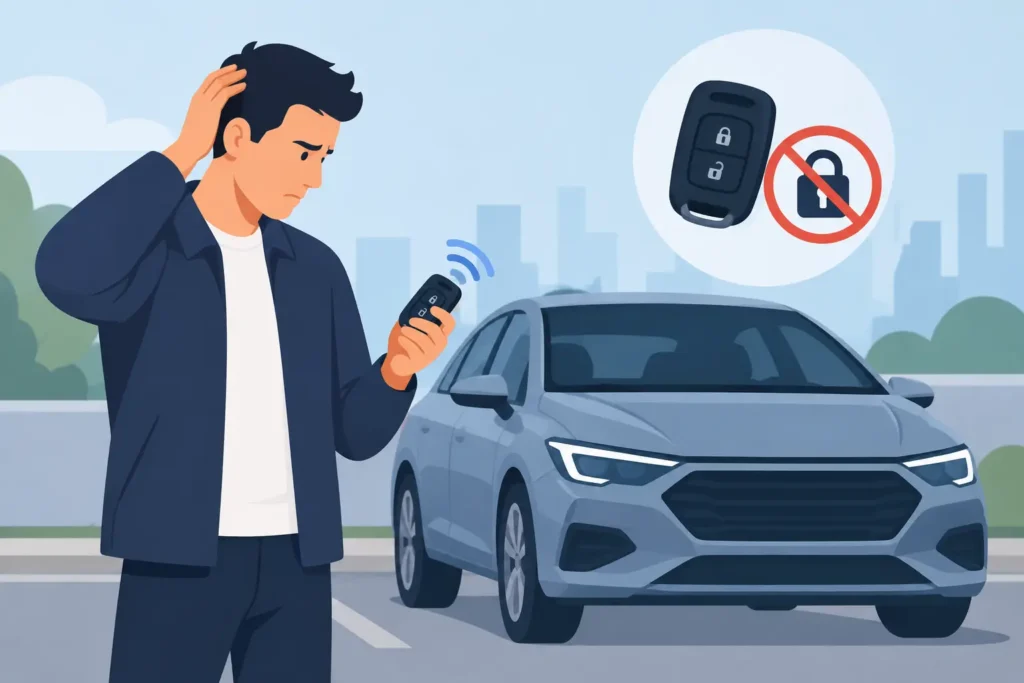
A message such as échec appairage antidémarrage is more than a dashboard inconvenience. It means the vehicle’s anti-theft system cannot confirm that the key, immobilizer, and engine control system belong together. Your lights may come on, the battery may seem fine, and the engine may still crank – yet the vehicle will not start or will start briefly and shut off.
This is not usually a problem that a spare jump-start, a new key fob battery, or repeated attempts with the key can solve. Modern vehicles rely on encrypted communication between several components. When that communication is missing or rejected, the immobilizer does what it was designed to do: prevent the engine from running.
What an échec appairage antidémarrage message means
An immobilizer pairing failure happens when the vehicle cannot validate an authorized key or cannot synchronize the modules involved in starting the engine. Depending on the make and model, those modules can include the engine control unit (ECU), body control module (BCM), instrument cluster, immobilizer module, steering lock module, and key or smart key system.
The exact wording varies by manufacturer. You may see an immobilizer warning light, a key symbol, “key not detected,” “anti-theft system,” “start error,” or a similar alert. Some vehicles provide no clear message at all. Instead, they crank without starting, start for one or two seconds, or refuse to recognize the push-button start command.
The key point is that a valid mechanical key blade is not enough. Even if the key turns in the ignition or the fob unlocks the doors, the transponder chip or smart-key credential still has to be recognized electronically.
Common reasons an immobilizer pairing fails
A pairing failure can appear suddenly, but it often follows a specific event. Identifying what changed before the no-start condition began helps narrow down the diagnosis.
A lost key, replacement key, or improperly programmed key
A newly cut key may operate the locks but fail to start the vehicle if its transponder was not programmed correctly. The same applies to a replacement smart key that has the wrong frequency, an incompatible circuit board, or a used key that cannot be reused on that vehicle.
Many drivers assume any key fob that looks identical will work. In reality, part numbers, chip types, regional specifications, and vehicle software can matter. A compatible key still requires proper enrollment into the vehicle’s immobilizer system.
Weak vehicle voltage or a drained battery
Low voltage can create confusing electronic symptoms. If the battery was severely discharged, disconnected, or replaced, certain vehicles can lose synchronization between modules or report faults that prevent authorization. A weak battery does not always cause an immobilizer pairing failure, but voltage should be checked before programming begins.
Programming a key or module on unstable voltage is risky. If communication drops during a procedure, the vehicle may require additional recovery work. A qualified technician uses a stabilized power supply when the situation calls for it.
Replaced ECU, BCM, instrument cluster, or ignition-related module
Module replacement is one of the most common reasons for an immobilizer mismatch. An ECU from another vehicle may be mechanically compatible, but it can still be electronically paired to its original immobilizer data. The same issue can occur after replacing a BCM, cluster, steering column lock, or other security-related component.
This is where basic key duplication stops being enough. The installed module may need to be coded, adapted, cloned where appropriate, or matched to the vehicle’s existing security system. The right solution depends on the vehicle architecture and the condition of the original module.
Water damage, wiring faults, or failed modules
Water intrusion under the dash, corrosion at connectors, rodent damage, or a failed control module can interrupt the data network that connects the immobilizer system. In these cases, adding or programming another key may not solve anything.
A proper diagnosis checks for communication faults, relevant trouble codes, power and ground issues, and signs of damaged wiring before any parts are replaced. Otherwise, a driver can spend money on keys or modules while the real fault remains untouched.
Incorrect procedures or aftermarket equipment
Some vehicles enter a security-related fault state after an incomplete programming attempt, incorrect scan-tool operation, or an aftermarket remote-start or alarm installation issue. This does not mean every aftermarket accessory is the cause, but it should be considered when the problem begins soon after electrical work.
What to do when the vehicle will not start
Start by protecting the vehicle from unnecessary complications. Do not keep cycling the ignition or pressing the start button for long periods. Repeated attempts rarely restore authorization and can drain the battery further.
If you have a second known-working key, try it once. If the spare starts the vehicle, stop using the failed key and arrange professional testing and programming. If neither key works, the issue is more likely related to the vehicle, its battery voltage, its antenna or key reader, or a module synchronization problem.
Check for obvious conditions: a weak battery, water around the key or fob, damage after a collision, recent module replacement, or recent electrical repairs. These details make diagnosis faster. Keep all available keys nearby, along with proof of ownership and the vehicle identification number. A professional will need to verify authorization before performing security programming.
Avoid disconnecting modules, swapping ECUs, or purchasing random keys online as a first response. Those shortcuts can create more variables and, in some cases, turn a repairable no-start into a more complex programming job.
Why OEM-level diagnostics matter
An immobilizer issue is not diagnosed by guessing which part “usually fails.” It requires communication with the vehicle through professional diagnostic equipment and an understanding of what the live data and fault codes actually mean.
A technician may need to confirm whether the vehicle sees the key, whether the immobilizer grants start permission, whether the ECU is receiving authorization, and whether the BCM and other modules are communicating correctly. Those checks separate a key issue from a module issue, a network fault, or a basic power problem.
OEM-level diagnostic capability also matters because many manufacturers use guided security procedures, access restrictions, and module-specific programming sequences. A generic scanner may read a code but lack the ability to complete the required adaptation or synchronization.
There is a practical trade-off here. Dealer service can be appropriate for certain warranty, software-update, or highly restricted security cases. But a mobile automotive electronics specialist can often diagnose and resolve key, immobilizer, and module-matching problems on-site, saving the cost and delay of towing a disabled vehicle.
On-site help for key and module synchronization
For drivers facing a no-start condition, the immediate goal is clear: determine whether the vehicle can be authorized to start without replacing unnecessary components. That may involve testing existing keys, programming a replacement transponder or smart key, diagnosing the key reader, or matching a replacement ECU, BCM, or related module.
Car Kez brings advanced key programming and electronic module diagnostic capability directly to vehicles across Greater Montreal. This is especially valuable when the car cannot be moved, when a replacement module needs proper pairing, or when a standard locksmith cannot go beyond cutting a key.
Not every immobilizer failure has the same fix. A lost smart key may be resolved in one visit, while a water-damaged BCM or corrupted ECU may require a deeper diagnostic process. Clear testing before programming or parts replacement is what keeps the repair focused and avoids wasted time.
When to call a specialist right away
Call for professional help when the vehicle cranks but will not start after a key replacement, when an anti-theft warning appears after module work, or when both available keys suddenly stop working. The same applies if the vehicle starts and immediately stalls, displays an immobilizer-related message, or has been exposed to water damage or electrical faults.
An immobilizer pairing issue does not mean your vehicle is permanently stranded, but it does call for the right tools and process. Preserve your battery, keep your keys and ownership documents ready, and have the system diagnosed before anyone starts replacing parts. A precise electronic diagnosis is often the fastest route back behind the wheel.