
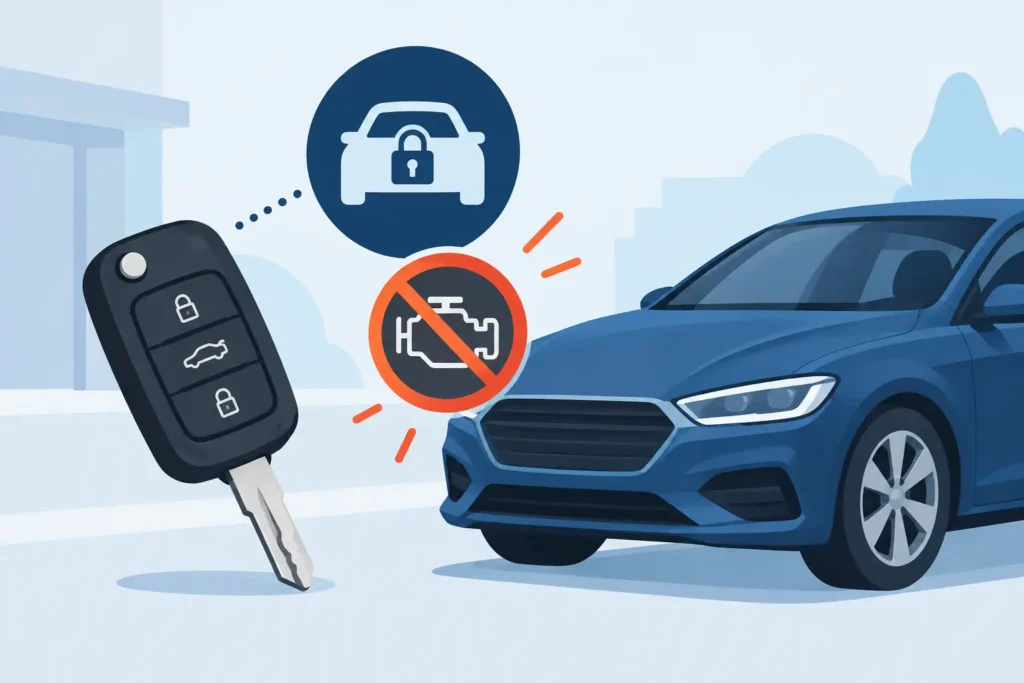
Your vehicle may have a healthy battery, working lights, and an engine that cranks normally – yet it still refuses to start. In many cases, immobilizer problems explained simply come down to one thing: the vehicle does not recognize an authorized key, so it blocks fuel, ignition, or starter operation to prevent theft.
An immobilizer is an anti-theft system built into most modern vehicles. It communicates with the transponder chip in your key or smart key, then confirms that the key is permitted to start the vehicle. When that communication fails, a small electronic issue can leave an otherwise functional car completely disabled.
What Immobilizer Problems Look Like
The most common symptom is a no-start condition immediately after inserting the key or pressing the Start button. Depending on the vehicle, the engine may crank without firing, start and shut off within a few seconds, or not crank at all. You may also see a security, key, or immobilizer warning light on the instrument cluster.
A warning light is useful, but it is not a complete diagnosis. A low vehicle battery, a failing starter, fuel delivery issue, or engine fault can also cause a no-start condition. The difference is that immobilizer failures often appear alongside key-related messages such as “Key Not Detected,” “Immobilizer Active,” or a flashing security icon.
Another familiar situation is when one key starts the car but the spare does not. That points strongly toward a damaged, unprogrammed, or incorrectly programmed key. If neither key works, the issue may be in the vehicle’s antenna ring, body control module, engine control unit, wiring, or stored key data.
Immobilizer Problems Explained: The Main Causes
An immobilizer system is not a single part. It is a chain of electronic communication between the key, the key reader, and one or more control modules. A fault anywhere in that chain can prevent starting.
A damaged or unprogrammed transponder key
Traditional ignition keys often contain a small transponder chip hidden inside the plastic head. The chip does not need a battery, but it can be damaged by impact, moisture, heat, or a poorly made replacement shell. If the chip is missing or broken, the metal key may turn the ignition but the vehicle will not authorize starting.
Replacement keys can also create trouble when they are cut correctly but never programmed to the vehicle. Mechanical cutting gives you access to the door and ignition. Programming is what gives the key permission to start the engine.
A weak smart-key battery or key detection issue
Push-button-start vehicles use a smart key that usually relies on a small internal battery for normal operation. A weak battery can reduce range or cause intermittent detection, especially in cold weather. Before assuming a major failure, try the vehicle’s emergency start procedure. Many models have a designated backup location where the key can be held against the Start button or placed in a console slot.
That said, replacing the key battery will not repair every “Key Not Detected” message. The vehicle’s interior antennas, keyless entry module, wiring, or receiver may be at fault.
Antenna ring or key reader failure
Vehicles with a conventional ignition typically have an antenna ring around the ignition cylinder. This part reads the transponder chip and sends its information to the immobilizer system. If the ring, connector, or wiring fails, even a known-good key may suddenly stop starting the vehicle.
This is one reason a spare key test matters. If both keys fail in the same way, the reader circuit deserves closer attention.
Module mismatch after a repair
A replacement ECU, BCM, instrument cluster, ignition module, or keyless module may not be synchronized to the rest of the vehicle. These modules often store anti-theft information that must match before the engine can start.
This issue is especially common after collision repairs, water damage, a used-module installation, or an attempted repair with incorrect programming. Simply installing a module with the same part number does not guarantee the vehicle will start. It may require module coding, immobilizer adaptation, key programming, or a controlled data transfer from the original unit.
Low voltage and communication faults
A severely weak battery can create misleading electronic faults. During cranking, voltage may fall low enough for modules to lose communication or reject an authorization request. Corroded battery terminals, poor ground connections, blown fuses, and water intrusion can produce similar symptoms.
Low voltage does not automatically mean the immobilizer is defective. It does mean the electrical foundation should be checked before programming decisions are made.
What You Can Check Before Calling for Service
Start with the simple checks that do not put the vehicle or its programming at risk. Try a spare key if you have one. If the spare starts the vehicle, avoid using the failed key until it has been tested and programmed properly.
For a smart key, install a quality new battery and use the emergency key-detection procedure listed in your owner’s manual. Check that the vehicle battery terminals are secure and that the battery has enough charge. If the security light is flashing, note whether the engine cranks, starts briefly, or remains completely silent. Those details help narrow the diagnosis.
Avoid repeatedly jump-starting the vehicle, disconnecting modules, or using online “immobilizer reset” tricks. Repeated low-voltage attempts can add fault codes, while random module swaps can turn a contained key issue into a synchronization problem. There is no universal reset sequence that safely fixes every make and model.
Why Proper Diagnostics Matter
A basic code reader may show generic engine faults, but immobilizer diagnosis often requires access to security data and module communication. OEM-level diagnostic equipment can check whether the key is recognized, whether the ECU has received start authorization, and whether the BCM, cluster, keyless module, and engine computer are communicating correctly.
The technician should first confirm the basics: battery voltage, fuses, grounds, key condition, and available spare keys. Next comes a scan of relevant modules, not just the engine computer. The goal is to identify whether the failure is caused by the key, the reader, a communication network issue, or a module mismatch.
That distinction affects the repair. Programming a new key will not solve a failed antenna ring. Replacing an ECU will not solve a dead smart-key battery. And a module that is electrically healthy may only need correct adaptation to the vehicle’s existing immobilizer system.
When a Mobile Automotive Specialist Is the Right Call
If your vehicle is stranded at home, at work, or in a parking lot, a mobile specialist can often diagnose and resolve the issue without a tow. This is particularly helpful when the problem involves lost keys, all keys lost, transponder programming, smart-key programming, or module synchronization after repairs.
For more complex cases, the vehicle may need key data recovery, ECU and BCM matching, or diagnostic testing at the connector and network level. Car Kez brings the equipment and programming capability required for many of these situations directly to drivers across Greater Montreal, including urgent no-start calls.
The right repair depends on what the vehicle is actually reporting, not just on the warning light. A clear diagnosis protects you from paying for unnecessary keys, modules, or dealership towing.
When your car will not recognize its key, treat it as an electronic authorization problem first, not automatically as a major engine failure. A careful test of the key, battery, and involved modules can often turn a stressful no-start into a direct, repairable solution.