
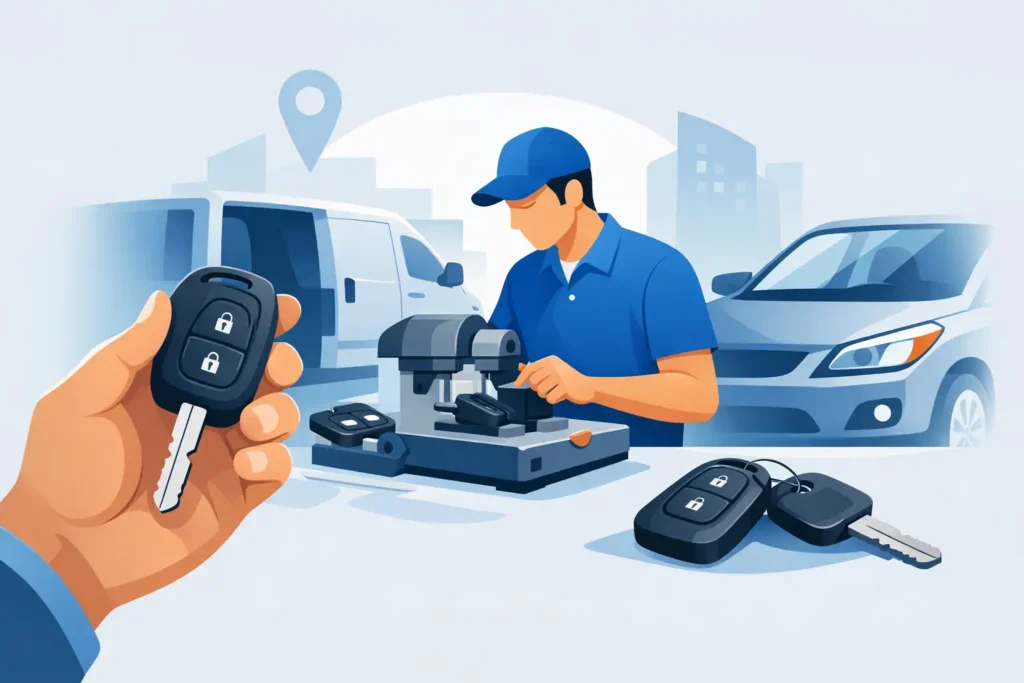
Losing time over a missing or worn key usually starts the same way – one key in hand, no backup, and a busy day getting worse by the minute. If you need a spare car key made onsite, the biggest advantage is simple: you do not have to arrange towing, wait at a dealership, or guess whether a basic hardware store copy will actually start your vehicle.
Modern vehicle keys are no longer just cut pieces of metal. Many include a transponder chip, remote functions, push-to-start proximity features, or security data tied directly to the vehicle’s immobilizer system. That means making a spare is often part locksmith work, part electronic programming. When the job is done onsite by a specialist with the right equipment, you get both handled where the vehicle is parked.
Why a spare car key made onsite saves more than time
For older vehicles, getting a duplicate key used to be straightforward. Cut the blade, test the turn, and you were done. On many newer vehicles, a working spare depends on proper communication between the key and the car’s security system. If that programming is skipped or done incorrectly, the doors may unlock while the engine still refuses to start.
This is where mobile service makes a real difference. A specialist can verify the vehicle, decode the key type, cut the blade if needed, and program the key to the car on location. That matters when the vehicle is stuck at home, in an office parking lot, or in a garage where moving it is already a problem.
It also reduces the risks that come with waiting too long. Many drivers put off getting a backup until the only working key is damaged, lost, or starts failing intermittently. Once you are down to zero working keys, the job often becomes more complex, more time-sensitive, and more expensive.
What happens during an onsite spare key service
A professional onsite visit is usually more methodical than people expect. The process starts with identifying the vehicle and confirming ownership. That protects the customer and ensures the correct key profile and programming path are used.
From there, the technician determines what kind of key the vehicle requires. Some cars use a traditional transponder key. Others use a flip key, a smart key, or a proximity fob. The right service depends on the make, model, year, and sometimes even trim level.
Key cutting is only one part of the job
If the vehicle uses a physical blade, that blade has to be cut accurately enough to operate the door lock and ignition, or in newer vehicles, the emergency key slot. A clean cut matters. Poor duplication can wear quickly, stick in the cylinder, or fail under normal use.
After cutting, programming may be required so the vehicle recognizes the spare. This is where OEM-level diagnostics and programming tools matter. The technician communicates with the immobilizer or related control modules, then introduces the new key so it can be authorized to start the engine.
Some vehicles need deeper electronic work
In straightforward cases, adding a spare key is a short service call. In others, the issue reaches beyond the key itself. The vehicle may have an immobilizer fault, a replaced module that was never matched properly, or a communication problem involving the ECU, BCM, or other control units.
That is one reason not every locksmith can handle every vehicle. Basic duplication equipment may be enough for simple mechanical copies, but it will not solve module synchronization issues or advanced smart key programming. If a car has a starting problem tied to security data, the technician needs more than a cutter and a blank.
When onsite key making is the best option
A spare car key made onsite is especially useful when convenience is only part of the problem. If your schedule is packed, mobile service saves you the trip. If the vehicle cannot be moved, it may be the only practical option.
It is also the better choice when you want the new key tested against the actual vehicle immediately. That includes lock operation, remote buttons, trunk access, push-to-start recognition, and engine start authorization. Testing on the spot avoids the common headache of finding out later that the key only does half the job.
For families sharing one vehicle, rideshare drivers, delivery drivers, and anyone who cannot afford downtime, getting a backup before an emergency is simply smart maintenance. A spare key is not just about convenience. It protects you from a much bigger disruption later.
Dealership vs mobile service
Dealerships can provide replacement keys, but the process is not always efficient for the customer. You may need to schedule days ahead, arrange transport for a non-starting vehicle, and work around shop availability. In some cases, the dealership route is the right call, especially for highly restricted key systems or brand-specific policy requirements. But it is not always the fastest or most practical solution.
A mobile automotive locksmith with advanced programming capability can often complete the same kind of work at your location, without the extra step of towing the vehicle in. That is where the service value becomes clear. You are not just buying a key. You are buying time back, avoiding transport costs, and getting the problem solved where it happened.
For drivers in Greater Montreal, that difference is often the deciding factor. Car Kez brings the workshop to you, which matters most when the vehicle is immobilized or your day cannot stop for a service appointment across town.
What affects the cost of an onsite spare key
Price depends on the vehicle and the level of programming involved. A basic metal key is one thing. A late-model smart key with encrypted security data is another.
The biggest factors are usually key type, vehicle brand, security system complexity, and whether all existing keys are still available. If you still have one working key, adding a spare is generally simpler than starting from scratch with no key at all. Some vehicles also require higher-level diagnostic access, PIN retrieval, or module adaptation before the new key can be accepted.
Location and timing can also affect service cost. Emergency after-hours calls are different from scheduled appointments. That said, many customers find onsite service economical once they factor in the cost and inconvenience of towing, missed work, and dealership wait times.
How to know you should not wait
There are usually warning signs before the last key fails completely. The blade may feel worn. The ignition may take extra attempts. Remote buttons may work inconsistently. Push-to-start systems may stop recognizing the fob unless it is held in a specific spot. Sometimes the key shell is damaged, and the electronics inside are one drop away from failure.
Any of those are good reasons to get a spare made now, while there is still a working reference key available. It is faster, cleaner, and less stressful than handling a total key loss situation under pressure.
Choosing the right provider for a spare car key made onsite
Not all mobile key services offer the same level of capability. If your vehicle uses a transponder, smart key, or proximity system, ask whether the provider handles programming as well as cutting. It also helps to confirm they work with OEM-grade diagnostics, not just cloning tools.
That distinction matters because some problems look like key issues but are actually security or module issues. A provider with stronger diagnostic capability can identify the difference on site and keep the repair moving instead of sending you to another shop after the first visit.
A good onsite service should be able to explain what your vehicle needs in plain language, verify compatibility before starting, and test the completed key fully before leaving. That is the standard to expect, especially when the goal is to get you back on the road without extra appointments or guesswork.
If you have one working key today, this is the easiest moment to act. Getting a spare made onsite is less about replacing something lost and more about preventing the kind of delay that always shows up at the worst possible time.