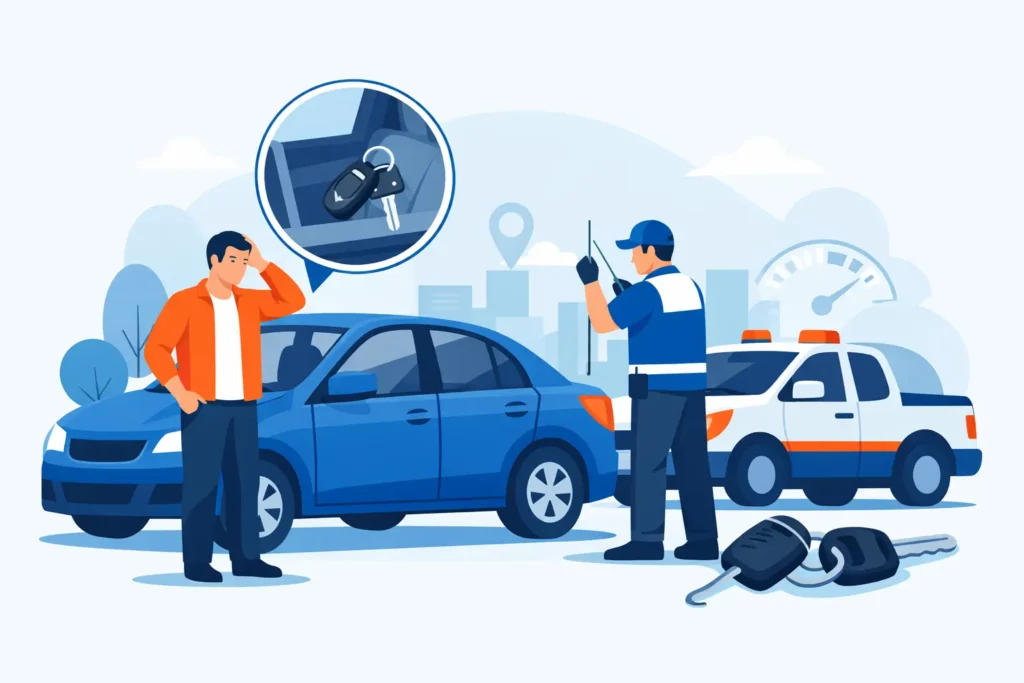
A vehicle lockout rarely happens at a good time. It happens in a grocery store lot with melting ice cream in the trunk, outside the office before an early meeting, or late at night when your key is sitting in plain view on the driver’s seat. In that moment, vehicle lockout help is not just about opening a door. It is about getting a qualified specialist to your location quickly, without creating new damage or turning a simple access problem into an expensive repair.
For many drivers, the first instinct is to search for the fastest option and hope any roadside service can handle it. Sometimes that works. Sometimes it does not. Modern vehicles are no longer just locks, handles, and metal keys. Many models rely on transponders, smart keys, proximity systems, immobilizers, and door modules that all have to work together. That means the right lockout service depends on what caused the problem in the first place.
When vehicle lockout help is more than a locked door
A basic lockout is exactly what it sounds like: the key is inside, the doors are locked, and the vehicle itself is otherwise functioning normally. In those cases, a trained automotive locksmith can usually restore access on-site with the right entry tools and technique.
But not every lockout is basic. Some drivers are dealing with a dead key fob battery, a damaged key blade, a failed latch response, or a BCM-related issue that affects door locking behavior. Others can get into the vehicle but still cannot start it because the immobilizer no longer recognizes the key. From the customer side, all of these situations feel like the same problem. From the service side, they are very different jobs.
That distinction matters because the wrong provider may be able to open the door but not solve the reason you are stranded. If the issue involves electronic authorization, module communication, or key programming, you need more than general roadside assistance.
What usually causes a vehicle lockout
The most common cause is still human error. Keys get left in the cabin, dropped in the cargo area, or locked in during a rushed stop. This is frustrating, but it is usually straightforward.
The next category is key failure. A worn key, cracked shell, dead fob battery, or internal chip issue can stop the vehicle from responding as expected. In older cars, a worn mechanical key might no longer turn cleanly in the door cylinder. In newer ones, the handle may not react because the proximity key is not transmitting properly.
Then there are vehicle-side faults. Door lock actuators wear out. Wiring can fail. The BCM may lose proper synchronization after electrical work, low voltage events, or module replacement. In some cases, what looks like a lockout starts as an electronic fault that prevents normal access or start authorization.
This is where experience matters. A technician who understands both automotive locksmith work and electronic diagnostics can identify whether the problem ends at the door or goes deeper.
What to do first when you need vehicle lockout help
Start with safety. If you are locked out in traffic, in severe weather, late at night, or with a child or pet inside, treat it as an emergency and communicate that immediately when calling for help. Response priority should match the situation.
If the situation is stable, take a quick look at the facts before you call. Check whether all doors are truly locked, whether the trunk is accessible, and whether you have a spare nearby. If your vehicle uses a smart key, try the handle on each door and confirm whether the fob battery may be the issue. If the battery is weak, some vehicles still allow backup starting methods, but that depends on the make and model.
Just as important, avoid improvised entry attempts. Coat hangers, screwdrivers, wedges used incorrectly, and online hacks can damage weather seals, window frames, lock rods, paint, and side curtain airbag areas. What looked like a way to save time can quickly become body damage or a repair bill.
A professional will usually ask for the year, make, and model, your location, and a description of what happened. If the key is lost, broken, or no longer recognized, mention that right away. It changes the tools and the likely solution.
What professional vehicle lockout help should include
At minimum, you want non-destructive entry whenever possible. That means access methods designed for the vehicle, not forced entry that creates damage. On many cars, this is routine work for a trained automotive locksmith.
You also want accurate problem identification. If the door opens but the key still will not start the vehicle, the job is not finished. A qualified specialist should be able to tell whether the issue is a bad key, a transponder problem, an immobilizer mismatch, or a module-related fault.
For newer vehicles, proper equipment matters as much as technique. OEM-level diagnostics and programming tools can be the difference between getting back on the road on-site and needing a tow to a dealer. That is especially true when access issues overlap with smart key programming, ECU authorization, or BCM functions.
This is where a mobile specialist has a real advantage. Instead of solving only the lockout and leaving the rest for another appointment, the right provider can often handle access, key work, and electronic diagnostics in one visit. That saves time, and in many cases it avoids dealership delays.
Vehicle lockout help for modern cars
Newer vehicles are generally more secure, but that also makes them more complex when something goes wrong. Push-to-start systems, encrypted transponders, proximity sensors, and anti-theft modules have reduced simple theft methods. They have also reduced the number of providers who can deal with access and authorization issues correctly.
If your vehicle has a smart key system, the lockout may only be part of the story. A discharged 12-volt battery can affect locking behavior. A failed key may not be detected. A replaced module may need matching before normal operation returns. These are not theoretical edge cases. They show up regularly in real roadside calls.
That is why technical depth matters. A provider who can work with ECU, BCM, and related systems is in a better position to solve the actual problem instead of just the symptom. Car Kez is built around that type of field service – mobile access help backed by advanced key programming and module-level diagnostics on-site.
How to choose the right lockout service
The best choice depends on the vehicle and the situation. If you have an older car, a standard lockout with the keys visible inside, and no sign of electrical trouble, many trained automotive locksmiths can handle it effectively.
If the vehicle is newer, the key is lost, the fob is not responding, the car will not start after entry, or you suspect an immobilizer or module issue, choose a specialist who works specifically in automotive keys and electronics. Ask whether they handle transponder programming, smart keys, and vehicle diagnostics, not just door opening.
Speed matters, but capability matters more when the problem is not simple. A fast arrival that ends with a tow is not always the fastest outcome.
It also helps to choose a mobile service that comes prepared for on-site resolution. That means more than lockout tools. It means key cutting capability when needed, programming equipment, and diagnostic systems that can communicate with the vehicle properly.
Preventing the next lockout
No prevention plan is perfect, but a few habits reduce the odds. Replace weak key fob batteries before they fail completely. If you only have one working key, get a spare made before it becomes urgent. Worn or cracked keys should be replaced early, especially on vehicles where a failing transponder can create both access and start issues.
It is also smart to pay attention to changing symptoms. If the locks work inconsistently, the push-button start has become unreliable, or the vehicle intermittently fails to detect the key, do not wait for a full lockout or no-start event. Early diagnosis is usually easier and less disruptive than emergency service.
For drivers with busy schedules, families, and daily commuting demands, the real value of professional vehicle lockout help is not only speed. It is getting the right fix at the scene, with the least disruption possible. Sometimes that means opening a door in minutes. Other times it means identifying a deeper electronic issue and correcting it where the vehicle sits.
When a lockout happens, the goal is simple: restore access safely, protect the vehicle, and solve whatever is actually keeping you off the road. The best service does all three and leaves you with one less problem to think about.
Pingback: On Site Car Key Cutting Done Right - Car Kez