You usually search for transponder key programming near me when the car will not start, the spare key suddenly stops working, or a replacement key needs to be matched fast. At that point, this is not a research project. You need the right service, the right tools, and someone who can get the vehicle recognized by its own security system without wasting your day.
Modern keys are not just cut metal. A transponder key contains a chip that communicates with the vehicle immobilizer. If that code is missing, incorrect, or no longer synced, the engine may crank and die, do nothing at all, or trigger a security warning. The key might look fine in your hand, but the vehicle only responds to what it reads electronically.
What transponder key programming near me actually means
Transponder key programming is the process of introducing a key’s chip to the vehicle so the immobilizer accepts it as authorized. On many vehicles, simply cutting the blade is not enough. The key must be programmed to the car, and sometimes the car must be prepared to accept the key.
That distinction matters because customers are often told they only need a duplicate, when the real issue is deeper. A failed key can be a chip problem, but it can also involve the immobilizer system, BCM, ECU, antenna ring, or data mismatch after module replacement. In other words, key programming and vehicle diagnostics sometimes overlap.
This is why searching locally matters. You are not only looking for a locksmith with blanks in stock. You are looking for a specialist who can confirm whether the fault is in the key, the programming, or the vehicle electronics.
When you need transponder key programming near me
The obvious case is a lost or stolen key. You need a new key cut and programmed so the vehicle starts again. In many situations, you also want old keys removed from memory so a missing key no longer works.
The second common case is adding a spare. This is the best time to do it, because programming a backup key is usually easier and less stressful when at least one working key is still available. Waiting until every key is gone usually adds cost, time, and complexity.
There are also less obvious situations. A replacement ignition, ECU, BCM, or other control module can create a mismatch that prevents starting. A key may test fine, but the vehicle still rejects it because the system components are no longer paired correctly. That is where a basic key-cutting service often reaches its limit.
If your car shows symptoms like a flashing security light, intermittent no-start condition, or a key that works for the doors but not the ignition, it may not be a simple duplication job. It may require programming plus diagnostic verification.
Why mobile service changes the experience
When the vehicle cannot start, the traditional path is frustrating. You arrange a tow, wait for dealership scheduling, then leave the car for diagnosis before key programming even begins. For many drivers, that means lost work time, extra transport costs, and a problem that grows larger than it should.
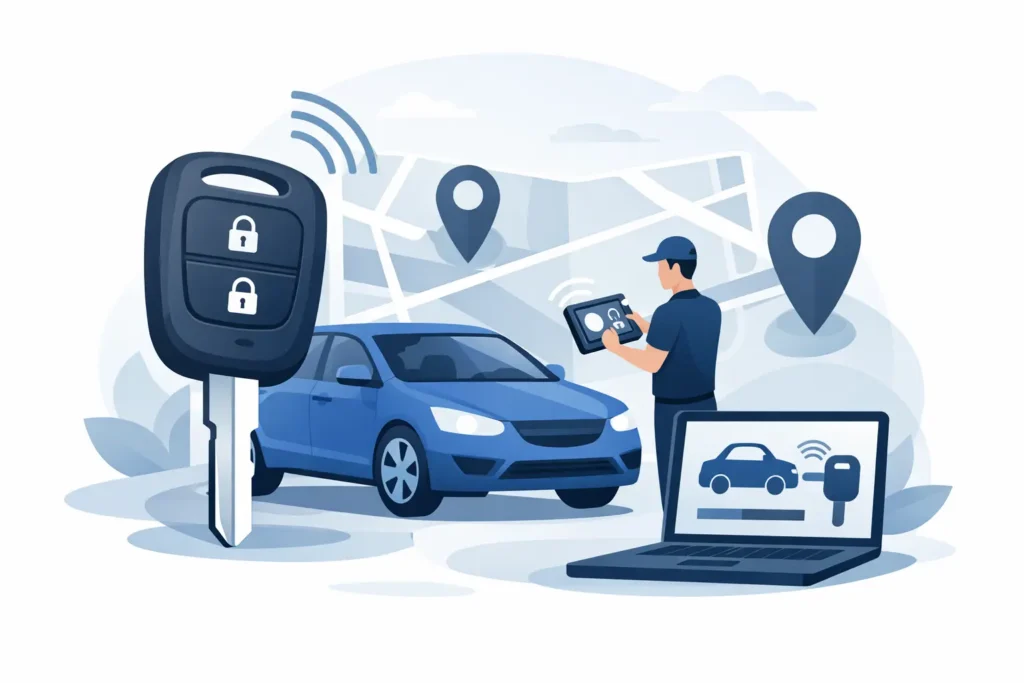
A mobile specialist brings the programming equipment to the vehicle. That matters because transponder work is performed at the car, through the onboard systems, with direct access to immobilizer and module data. If the issue is straightforward, the service can often be completed on-site. If it is more complex, the technician can still test the system where the failure is happening instead of making assumptions from a parts counter.
For busy drivers, families, and anyone stranded at home, work, or roadside, mobile programming is less about convenience as a luxury and more about reducing downtime. It gets the diagnosis and the solution started immediately where the vehicle sits.
Not all key programming services are the same
A lot of providers advertise key programming, but capability varies. Some can only clone certain chips or handle basic onboard programming. Others can work directly with immobilizer systems, PIN retrieval procedures, module adaptation, and OEM-level diagnostics.
That difference shows up when things are not textbook simple. Maybe all keys are lost. Maybe the used module installed by another shop needs matching. Maybe the ignition was replaced and now the vehicle starts inconsistently. Maybe an aftermarket key was cut, but the transponder data does not match what the car expects.
In these cases, experience with vehicle electronics matters just as much as locksmith skill. The right technician should be able to identify whether a new key is the answer or whether the key problem is really a symptom of a larger synchronization issue.
What a proper service visit should include
A professional transponder key programming job starts with verification, not guessing. The technician should confirm the vehicle details, check existing key status if possible, and identify what system the car uses. From there, the process may involve cutting a new key, programming the transponder, syncing remote functions, and testing start and access functions before the job is complete.
On some vehicles, programming is quick. On others, security procedures are tighter and require more time. European, Asian, and domestic makes all have different logic, and even two model years from the same brand may use different immobilizer systems.
This is where OEM-grade diagnostics make a real difference. They allow the technician to read faults, confirm communication with the relevant modules, and avoid replacing a key when the real issue is a failed component or corrupted data. That saves money and prevents repeat visits.
Dealership vs mobile specialist
For some owners, the dealership feels like the safest route. In certain cases, it is a valid option. But it is not always the fastest or most practical, especially when the car cannot move.
A dealership may require towing, scheduled intake, and longer wait times. A mobile specialist can often respond faster and complete the work where the vehicle is located. The trade-off depends on the vehicle, the type of key system, and the nature of the failure. Some newer encrypted platforms or manufacturer restrictions may narrow the available options. A reputable provider should be clear about that instead of overpromising.
For many common situations, mobile service delivers the same result with less disruption. And when the issue extends beyond the key into ECU, BCM, or immobilizer communication, a technician with advanced programming capability can solve problems that general locksmith services usually cannot.
How to choose the right provider
When you compare local options, ask what kind of programming they actually perform. There is a big difference between key duplication and full immobilizer programming. Ask whether they handle all keys lost situations, whether they can diagnose no-start and security faults, and whether they work with OEM-level scan and programming equipment.
It is also worth asking what happens if the key is not the problem. A serious provider should be able to test the system and explain the next step clearly. If every answer sounds like a blanket promise, that is a warning sign.
Response time matters too, especially in urgent situations. So does clarity on pricing. Some jobs are straightforward and easy to quote. Others depend on the vehicle platform, key availability, security procedure, and whether additional diagnostics are needed. Honest service usually sounds more precise than cheap service.
For drivers in Greater Montreal, this is exactly where Car Kez fits best – on-site key solutions backed by advanced module and immobilizer diagnostics, not just basic duplication.
The cost question
Customers naturally want a simple number, but transponder programming is one of those services where cost depends on the job. A spare key added to a working vehicle is usually more efficient than rebuilding access after every key is lost. A standard transponder setup is different from a proximity smart key system. A clean programming session costs less than a visit that turns into module diagnosis.
The better way to think about value is this: are you paying only for a key blank, or for a working solution that gets the car started again without towing, delays, and repeat failures? The lowest quote is not always the lowest final cost if the provider cannot finish the job.
A better way to search locally
If you are searching transponder key programming near me, the fastest path is not just finding the closest name on a map. It is finding someone who can cut the key, program the chip, verify immobilizer acceptance, and diagnose deeper electronic issues if the vehicle still does not respond.
That combination is what gets you back on the road with fewer steps and less guesswork. When the key and the car stop recognizing each other, the fix needs to happen where those systems meet – at the vehicle, with the right tools, and with someone who knows how to follow the problem all the way through.
Pingback: Broken Car Key Extraction Service Explained - Car Kez
Pingback: Spare Car Key Made Onsite: What to Expect - Car Kez
Pingback: Car Key Programming: What Drivers Should Know - Car Kez
Pingback: Why Does My Car Say No Key? Causes and Fixes - Car Kez
Pingback: How Much Does Auto Locksmith Cost? - Car Kez